

The day Grayson died, my innards dried up like a raisin. The moisture that once lubricated my life and kept everything rolling—even amid mass chaos—simply evaporated, taking with it my thoughts, my voice, and mainly…my words.
Even if I had known what I was feeling in those following days…weeks…months…there were simply no words left to express myself. Grayson’s departing left me bone-dry, tongue-tied, silent as a breathless flute.
All the vibrant, supple, magical words that previously flowed in and through and from me provided the skeleton that structured my thoughts, moods, and perceptions. They were my inpouring, my outpouring…my offering. Words, like vehicles, traversed the highways and byways of my soul, conjoining my inner world to the outer. Words connected me to people!
But with Grayson’s passing, every last word up and abandoned me, leaving me stranded and wandering through a roadless, carless desert like a hitchhiker with no thumbs.
As such, I have persisted in this relative silence for four lonely months. Raking for words recently accessible, scanning my internal void for something, anything of substance that resembled a once familiar language. Yet, there has been only nothingness. Only an endless, perpetual, silent, empty blankness.
So it is today, nearly four months after Grayson’s death, that I find myself sitting in a quaint, seaside restaurant called “Monk’s.” (The irony between a monastic’s chosen silence and my own—more imposed than chosen—is not lost on me as I write.) My husband, Arin, and I are flanked by the sea on one side, but surrounded on the other three by a desolate limestone landscape. We are on the west coast of Ireland. Ballyvaughan, to be exact.
Driving north from Shannon Airport, we had begun noticing a gray, almost lavender hue to what we Coloradans would refer to as hills, yet are known to the Irish as mountains. Unknowingly, we had entered into a well-known landmark area called “The Burren,” where entire “mountains” are made of limestone, and everything else—walls, fences, houses, and churches—appears to be made of the same.
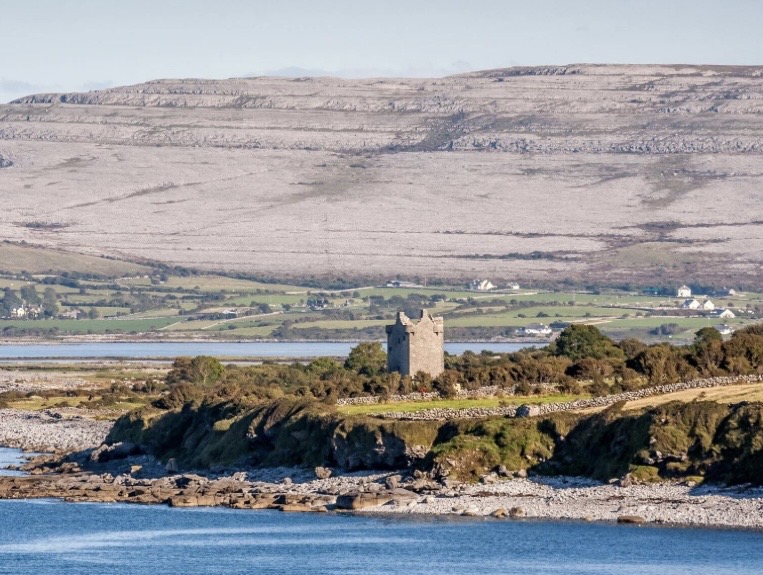
This landscape feels cold and barren, nothing like the Ireland I was anticipating, and I have an uncomfortable sense of wanting to “move along. Nothing to see here.”
It’s been a hellacious summer. Easily the worst of our life. Several weeks after Grayson’s funeral, we were evacuated due to the massively destructive Aspen Acres fire in southern Colorado. We were displaced for three weeks total, uncertain as to whether we would lose our home so shortly after losing our son. Simultaneously, my husband’s career paths, present and future, were crumbling before our eyes, and we instantly found ourselves without income, health insurance, or even a meager compass with which to orient ourselves.
Genuinely worried for my husband’s health and soul, I secretly planned an impromptu month-long trip to Scotland and Ireland. And so, here we sit—at a table in Monk’s restaurant in Ballyvaughan, Ireland, surrounded by grayish-purplish limestone hills.
Presently, something strange is happening to Arin’s face and body as I observe him across the table. Upon reflection, I imagine the same is happening to mine. It’s contorting, buckling in on itself like an aluminum can in a crusher; wrinkled lines are furrowing to touch other actively crinkling lines, and his eyes have all but disappeared. His body is heaving—his shoulders rise and fall, and his head jerks about erratically like a fishing bobber on a windy day.
This odd occurrence feels vaguely familiar, like something we once did. Perhaps frequently. A long, long time ago. Seemingly, in another life.
Slowly the verb comes to me like a feather—floating back and forth, back and forth, back and forth—before finally landing, until at last, I realize…we’re laughing. We, my husband and I, who so tragically lost our autistic son four very short and long months ago, are actually laughing. Belly laughing. Tears are pooling, then streaming from the corners of our eyes, and there is no other way to put it: we are properly guffawing.
We’re overly loud for this quaint little restaurant, and we’re not even drinking (unless you count Arin’s singular 3.7% beer that seems to be standard in Ireland, which I don’t).
Moments earlier, idling in our little rental car in the restaurant parking lot, we finally received a callback from the owner of the Airbnb home where we were supposed to be staying. We had just wasted the last thirty minutes of our lives fiddling with a lockbox that allegedly held a house key, then double- and triple-checking the code when it refused to open. We had wiggled door knobs, pried open cracked windows, only to be dive-bombed by what felt like a million flies. I even suggested that Arin hoist me through that same grime-encrusted bathroom window to gain entry.
Additionally disappointing, the drive to the Airbnb had looked nothing like I’d imagined, and I had found myself growing angrier and more anxious with every passing mile down that extensive, isolated, overgrown, single-lane road. Rolling up the gravel driveway to the house, I was dismayed to discover that it, too, felt unkempt, overgrown, and neglected. Two rusty bicycles sat propped outside the front door, and the house showed none of the photographed charm from the Airbnb website, nor did it adequately reflect the many reviews I had meticulously combed through.
Still, the cottage was named correctly; I had copied and pasted the address directly from Google. Yet when I searched the nearby towns that the homeowner claimed were only twenty minutes away, Google reported that they were actually two-and-a-half hours away! Additionally problematic was the fact that we had no cell service at the property, which the reviews and the owner had also failed to mention, hence the reason we drove to the nearest town—leaving the gate chained wide open since we would certainly be quickly returning—and now found ourselves sitting at a table at Monk’s.
After conversing with the homeowner in the parking lot and gradually piecing together that we had been, in fact, at the very wrong house, two-and-a-half hours away from our intended destination, it’s suddenly occurred to Arin (now seated at our table inside) that we just spent thirty minutes attempting to break into someone else’s home.
This sudden realization, along with all of the possible what-ifs (What if the owners had been home? What if we had gotten in and actually started unpacking? What if they came home after we had unpacked and were making ourselves comfortable-ish in their home? What will they think when they return home and find their gate chained open?) now has us belly laughing and wiping tears from our eyes.
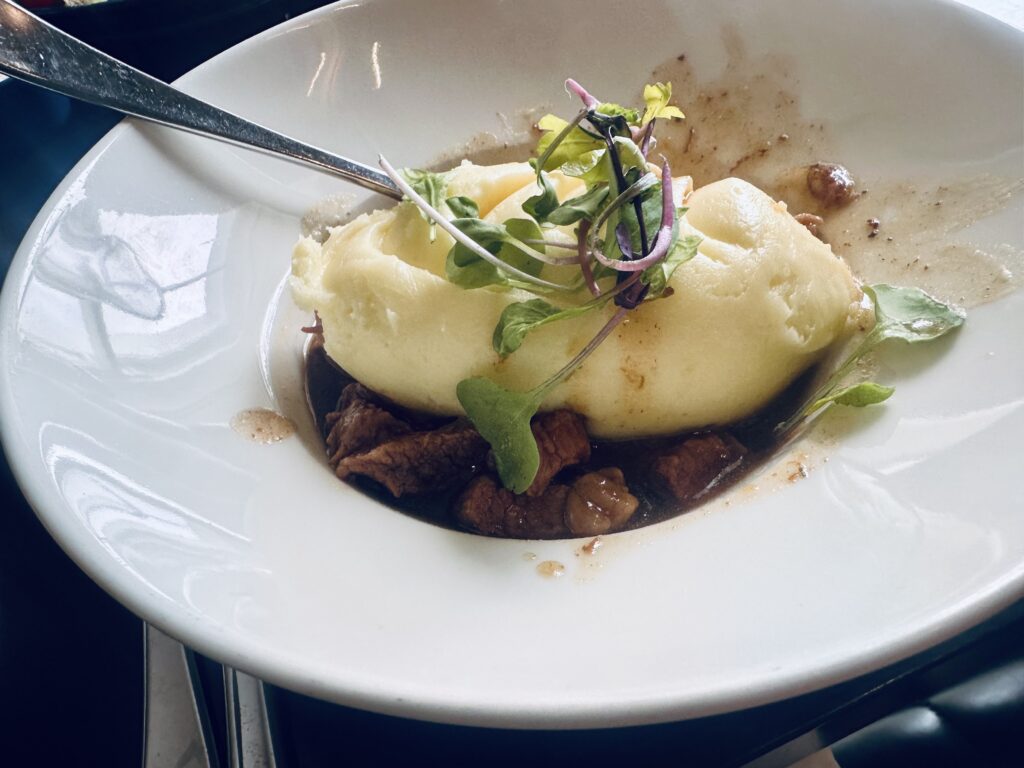
Gradually, we settle down and dig into our delicious meals of fish and chips and Guinness beef stew topped with buttery mashed potatoes and microgreens. Yet it is only when we are seated in the car, heading north toward our actual Airbnb that I begin considering exactly how long it’s been since either of us has laughed, really laughed, like we did back there at Monk’s.
A long time, I conclude sadly. It’s been a very, very long time.
A question forms in my mind as we drive: how does laughter return after such a long period of darkness?
I find myself promptly answered with the words of Virginia Woolf, “Miraculously. Frailly. In thin stripes.”
I recall this line I’d quoted in my book and look it up for full context. “How then does light return to the world after the eclipse of the sun?” Woolf asks. She continues, “Miraculously. Frailly. In thin stripes. It hangs like a glass cage. It is a hoop to be fractured by a tiny jar. There is a spark there. Next moment a flush of dun. Then a vapour as if earth were breathing in and out, once, twice, for the first time. Then under the dullness someone walks with a green light. Then off twists a white wraith. The woods throb blue and green, and gradually the fields drink in red, gold, brown. Suddenly a river snatches a blue light. The earth absorbs colour like a sponge slowly drinking water. It puts on weight; rounds itself; hangs pendent; settles and swings beneath our feet.”
I breathe out slowly and fully, gaze out my window, and consider these words. They sit, satisfying and pleasantly heavy, in my chest.
Even so, we are still surrounded by limestone upon more limestone—hard, cold, gray, unfeeling, silent, wordless limestone.
Suddenly, I am no longer certain whether I am seeing the limestone…or myself. Whether I am more disturbed by the limestone…or myself.
“Nothing to see here. Move along.” This feeling rises and presses urgently, and I find myself wanting Arin to speed past these barren mounds (at least as fast as one can while learning to drive on the right side of the car on the opposite side of the road), to get to the real Emerald Isle. The green one. The good parts. The luscious, supple, fertile, abounding, poetic Ireland I’ve so long imagined.
But Arin is content to dwell in the gray, realistic present and is brimming with questions about limestone: How did it form? How in the world did the original settlers make the land plowable? Where did they put all of it?
I pick up my phone and reluctantly begin researching limestone.
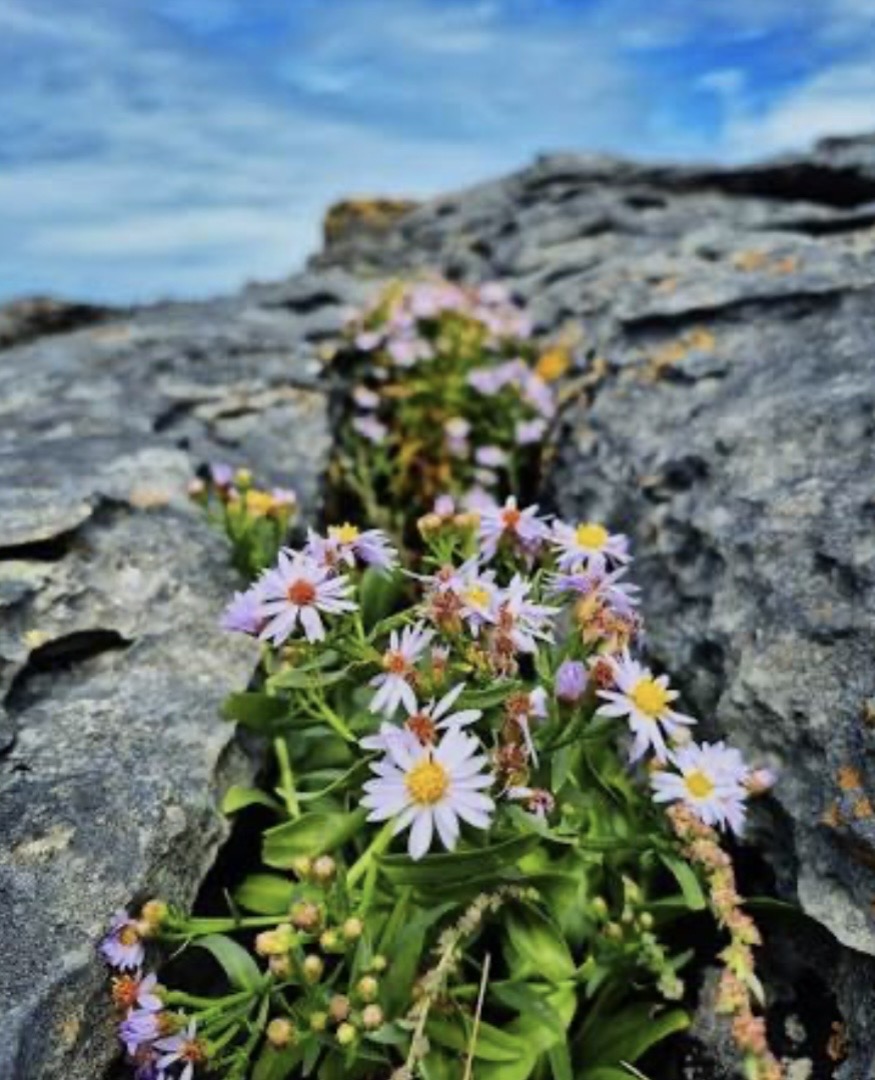
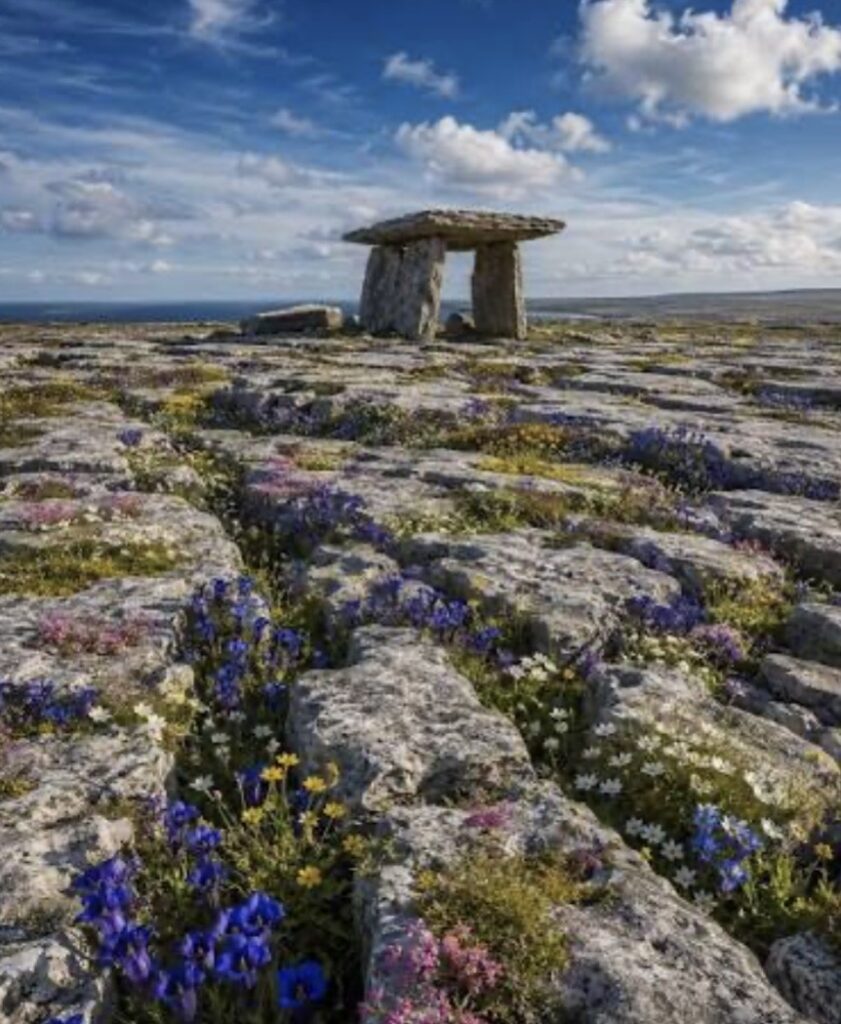
Immediately, this unexpected statement snags my attention: “Rare Wildflowers: Arctic, Mediterranean, and alpine plants grow side by side in the rock crevices.”
Forgetting my discomfort, I embark on my own wild goose chase and begin googling images of this hearty hodgepodge of flora that has somehow managed to grow (and thrive!) between cracks of grayish-purplish, lifeless limestone.
I am astonished at the images that pop up on my phone; they’re stunning. Bursts of hot pinks, verdant greens, and deep purples bloom and grow where they logically shouldn’t, and I find myself wondering: how can life exist amid such harshness?
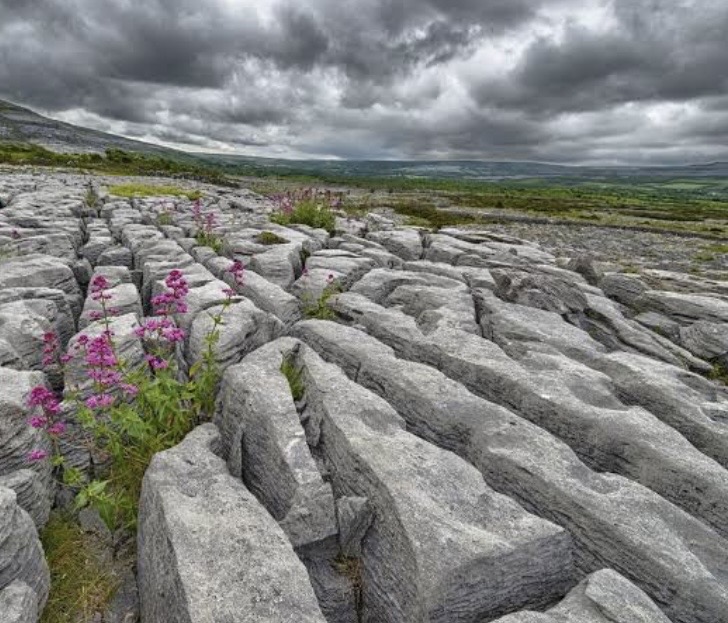
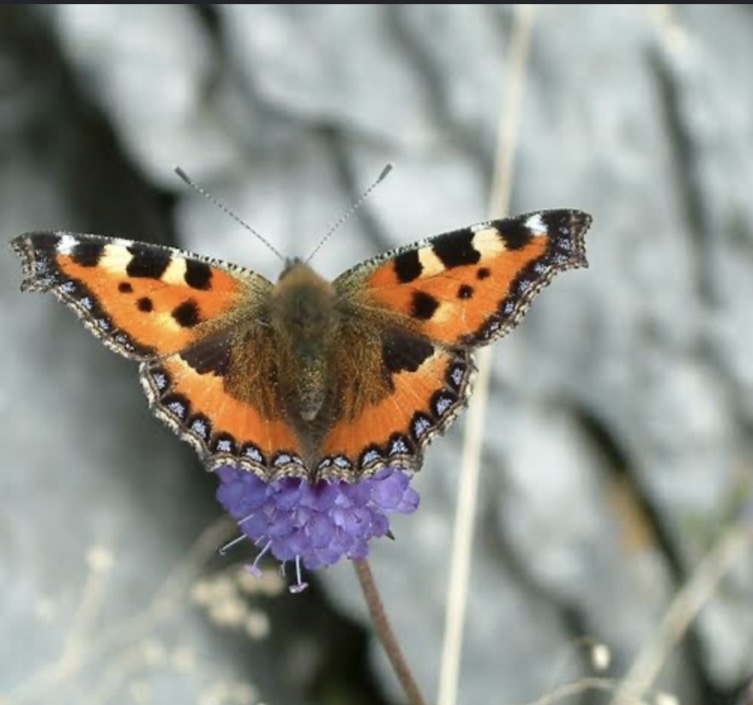
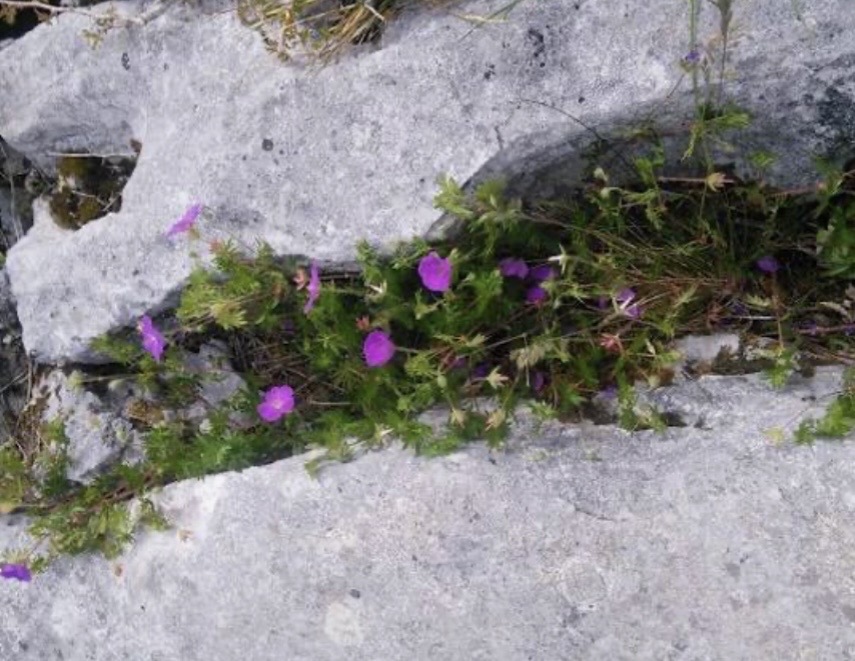
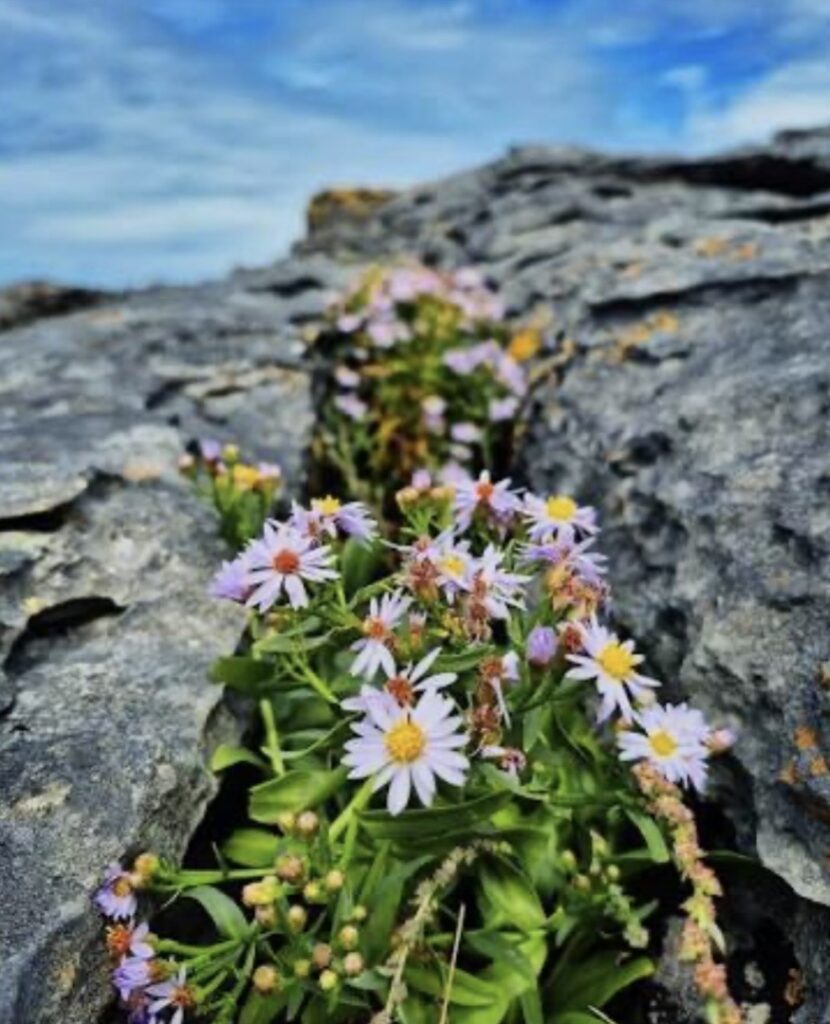
I continue pouring over photos of the Burren. Photos taken by a drone reveal a bird’s-eye view. What I once beheld as gray, almost lavender, lifeless mounds of rock now come to life in patterns that move and flow in whorls and swirls and spirals. They reveal the overarching truth of the matter, that the Burren is, in fact, teeming with life, but life unlike any other. Its patterns, like a one-of-a-kind fingerprint, contain the memories of a thousand storms, of turbulent winds and blasting rains, of all who have lived and died and suffered and laughed.
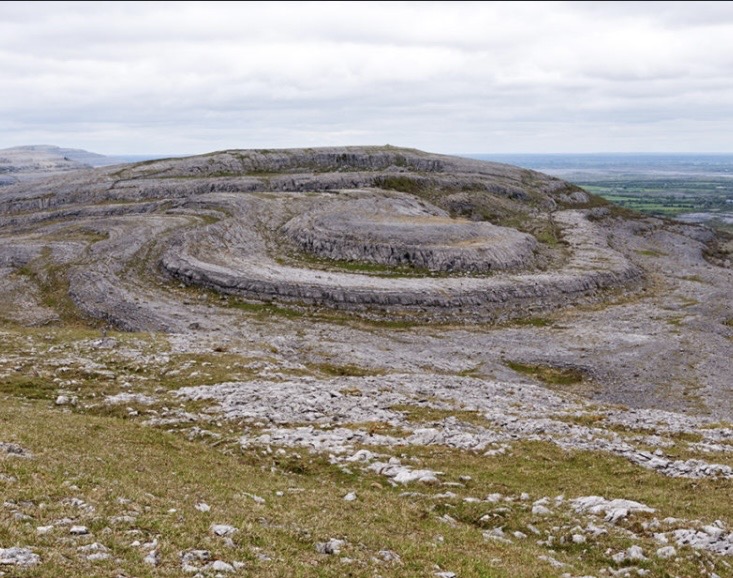
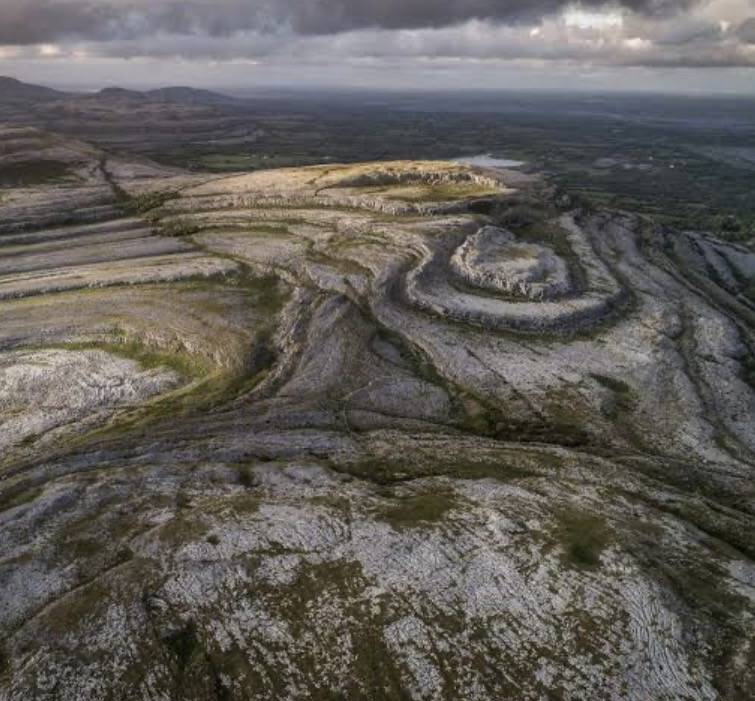
Yet, upon closer examination, the Burren is also the nearly imperceptible flowers that have emerged in the cracks, in the in-between slivers where the harshness of the limestone has been eroded by the tearful softness of water, the coaxing of the intermittent sun, and the respite between storms.
I ask the same question, this time, now knowing the answer: how does life exist amid such harshness?
Miraculously.
Frailly.
In thin stripes.
Suddenly, everything converges—our life, the desolate grayish, purplish limestone, the tiny, vibrant flowers, our raucous laughter at Monk’s, the bleakness of our summer, my absent words, the blank, stark white canvas of our life—and I understand: it is all one and the same.
I am the Burren. The Burren is me.
I consider our future, my cold, unfeeling, wordless heart that feels so strangely akin to the surrounding limestone, which is growing more familial by the moment. I realize that while I don’t know what our future will look like, I now know how life will return.
Miraculously.
Frailly.
In thin stripes.
The following morning, I awaken in our correct Airbnb, an adorable cottage in the Irish countryside, this blog post fully formed in my mind. It is the first time I’ve even thought about writing since Grayson’s death. It will take me five days to pen what would normally have taken hours. But I can now catch a glimmer of how my words will return.
Miraculously.
Frailly.
In thin stripes.
And the bird’s-eye view of its sum will be stunning.
16 thoughts on “How Does Life Return?”
Lovely☦️
Thank you Corey, for your words. They touch my heart, always…..love you.
So much truth there… I feel like I’m walking alongside you two in your journey, trying to understand and to learn. So beautifully written… Love you both!
Beautifully written. Isn’t laughter such a great, healing gift! So glad you had those moments together. Piecing the hills along with the words from the book was really wonderful. What an enjoyable read. Wishing you more healing in your travels.
ALL of this — the story, the images, the truth, the emergence — all of this is stunning! If I were a tattoo-getting type, I would strongly consider getting those words, woven into a sketch of one of those images, permanently put on my skin. “Miraculously. Frailly. In thin strips.”
Beautiful, Corey! I’ve been thinking about you and your family. ?
You write so beautifully Corey, thank you for always sharing your heart, it so touches me!
Thank you again Corey for your gift to us. Beautiful deep life-story, always coming from your heart. It feels as if I am right there, experiencing with you.
Thank you, Lynette. You are all in our hearts here with us. ❤️ Miss you!
Thank you, Panayota. So kind of you. Hope you guys are well! ❤️
Thank you for the gift of your precious thoughts. ❤️
Hmmmm…tattoo in Ireland????? Miss you!!!!❤️
Thank you so much, Chris. So. Ice to hear from you! This trip is just what the doctor ordered! ❤️❤️?
You are certainly with us every step of the way and I constantly learn from you and your humility! Miss you guys!❤️
Thank you, Nicole. Love you so much right back!!! ?
Thank you, Bonnie. ❤️
Comments are closed.